Pages

Tuesday, 18 May 2010

Character Interview Blogfest!

I've decided to jump on the blogfest bandwagon and try my hand at hosting one! I don't know if this one has been done before, but I thought it would make for a lot of fun. 

So please, if you can and you're interested, do blog or tweet about this or tell people about it. The more, the merrier!


The Character Interview Blogfest
(!!!) 


Many of us have experience with characters who whisper in our heads late at night, or characters who remain resolutely silent and stubborn when you need them to tell you what's going to happen next in your story. Some of us may even have sat down with a cup of tea or coffee, and interviewed our characters.


So that's what we're going to do.


Pick any one of your characters, and interview them. Then post that interview on your blog. It can be funny, it can be serious and enlightening, it can be deep, it can be completely frustrating if your character's being difficult. Either way, I think it could be a lot of fun to do (and to read). Not to mention it's a great character exercise!

Try to limit your interviews to about 500-700 words.


The post date is Tuesday the 15th of June, which is exactly four weeks away.


How to enter-


Comment on this post, letting me know you're wanting to enter.

Then just sign up using the sheet in the sidebar!


And that's it!


Once again, I do hope you'll participate, and please do let people know about it!

Monday, 17 May 2010

So, University. What did you teach me?

With my degree now pretty much done, and graduation in July, I thought I'd look back on the last three years and ask them: what have I learned from you? 

More specifically, what have the last three years done for me in my writing?

My degree is in English Literature with Creative Writing, which means I've spent three years attending workshops once a week where the group critiques each other's submissions. That, obviously, has done wonders for my writing: I've learned control, I've learned to be disciplined (usually), and I've learned how to avoid the common mistakes that appear in my work. I've also learned to critique other people's work effectively, which in turn makes you look at your own work more critically and objectively.

What about the English lit part? I really think reading a lot helps you write better, but I have to say, looking back, there have been so many concrete moments of inspiration that I've derived from specific texts and ideas we've explored.


In my first year, we looked at Robert Browning's poetry (amongst many other things, obviously) and that was when I learned about beauty, death and the attraction these ideas had for writers of the time. This didn't have a direct impact on my writing but now, three years on, I often find myself, when writing about death, touching on the intensely physical and beautiful aspects of it. The cold skin, the sound of a waning heartbeat, orchids and lilies, all these things that intertwine beauty and poetry with death and tragedy.


In my second year, I did courses on Romanticism and Victorian lit. Mary Shelley's Frankenstein and Emily Bronte's Wuthering Heights each inspired, in different ways, what eventually became my novel ECHOES, while Coleridge's 'The Rime of the Ancient Mariner' inspired the albatross that appears in TEA WITH DEATH, DESIRE AND RAGE.


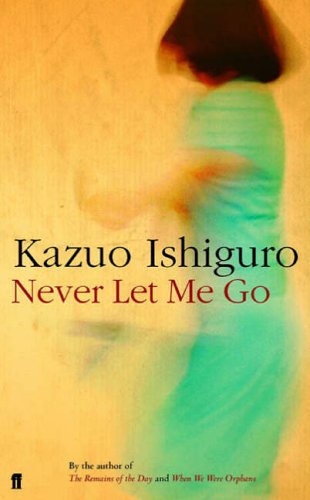
This year, my third year, I wrote a dissertation on dystopian fiction, which lent me so much material and understanding and theory that I've been able to apply to the slightly dystopian Weaver/echo premise of ECHOES. One of the novels I used was Kazuo Ishiguro's Never Let Me Go, which gave me a wider grasp on clone-related fiction and helped me research the subject a bit more. ECHOES is about a fantasy variant of clones.


I also did a course on modernism, which made me really passionate about using the city or the landscape as a heaving, thriving force in my writing. Now I very rarely write a story or novel without making the setting a hugely important and almost alive part of the text.


And finally, being at Lancaster University gave me Lancaster: an old, beautiful city surrounded by absolutely incredible countryside. This setting is significant to ECHOES, and will continue to be hugely important if and when I write the sequels.

There's a parking lot in the city where, if you look out over the city's skyline, you could actually be standing there a hundred years ago and it would probably have looked just the same.  I find that incredibly poignant and amazing.

It's worth mentioning too that some of my best memories are set in Lancaster, on campus, around this university. It's not just my writing that fell in love with this place. I have too, and, awful weather aside, I'll miss it dreadfully.

Can you trace your ideas and stories back to a specific root or inspiration? Has school, university or just learning something new triggered off a story or a passion for you?

Sunday, 16 May 2010

Weekend adventures


I've been appalling remiss in my blogging this weekend. It was my birthday on Friday, which meant I had barely enough time to sit still all day and night, let alone think of something to blog about over the weekend. Then I spent yesterday recovering, going on a nice romantic drive with Steve to get some fresh air and make the most of the sunny day, and I've barely had a spare moment since.

Whew.

So that's my rather pathetic excuse and I do hope you'll bear with me. Tomorrow, a new week begins, and I shall be back to my old writerly self, full of all the strange and hopefully entertaining things I usually blog about!

How did everyone else spend their weekend? Any exciting stories you'd like to share? I'd love to hear them! 

Friday, 14 May 2010

Silver Linings

So today, in the wake of yet another query rejection (I'm bouncing back, I'm bouncing back, I'm thinking of the four requests instead of the eight rejections), I've decided to do another list. A list of Why Rejection is a Good Thing.

What? I hear you cry. Have you been drinking? (Why, yes, I have, it's my birthday - as I'm sure anyone who has seen Steve's 'grand surprise' below will know) Have you lost possession of your senses? (Well, I'm not entirely sure I ever possessed them. Who wants sense, anyway?)

Seriously, though, my judgment is in no way impaired and no, I'm not actually crazy. At least, not as far as I'm aware. So bear with me, and let's frolic through the riot that is Rejection. 


Why Rejections Are a Good Thing

1. Being rejected tells you one of two things. First, that your book/project is just not good enough yet and that you need to do more work on it. Or, that the person who rejected it is not the right fit. Either way, you've learned something and you can move on accordingly.

While form rejection letters are a pain, they usually do tell you which of the above is more applicable. I just didn't connect with the writing sample means your sample wasn't good enough/didn't appeal to that particular agent. I don't think I'm a right fit for this usually means just that. Try someone else. Also, I've had my sample pages rejected one day, only to have a different agent request them the next. This doesn't mean they don't need more work, because they probably do. It just means tastes vary so much.

2. Tastes vary. So rejections can often mean nothing! 

(Warning: too much of this attitude might earn you a reputation as Arrogant Prize Jackass Who Refuses To Understand the Work is Just Not Good Enough Yet. Fine line to be toed, but toed it must be.)

3. You are one step closer to the award of Most Rejections Ever in the History of the World, a most prestigious, admirable and enviable award celebrating the recipient's thick skin, persistence and appalling bad luck.

4. They remind you that luck has a lot to do with this process, so really, don't blame yourself or your project for every single rejection slip/email.

5. Rejections are the perfect excuse to have that extra bar of chocolate, second glass of Malibu, or a nice lie-in the next morning. Rejections also get you loads of sympathy and, if you're lucky, a foot rub. Aw.

6. Some rejections can be very helpful. Many agents, rejecting a partial or full, will offer you at least one honest reason why they passed. While you can choose to ignore this if you think the agent didn't 'get it', most of the time these comments are useful and tell you where you can improve. If nothing else, knowing an agent didn't 'get it' could suggest you're not being clear enough. When agents move from the generic to the intensely subjective about their reasons, however (an agent once told me he wanted to see more action scenes in my book), this is where you need to be careful about what you listen to and what you politely ignore. I didn't take the agent's advice on that one, simply because it wasn't supposed to be an action-packed book and because I knew his tastes were obviously different from mine. But I gave it careful thought before deciding 'no, I'm not going add more action scenes in'.

7. Some rejections can be downright encouraging and sweet. My favourite rejection ever was from an editor from a very big fantasy publisher. He sent me a form letter telling me that the house didn't feel my story was right for them. Enclosed in this letter, however, was a handwritten note in which the editor had written the following:

Lots of promise and talent here, but needs shaping. Do hope you'll work on it. Don't give up! Best, [Editor's First Name]

I swear, I adored him for that, rejection or no rejection. It wasn't that I needed to hear praise (though it was nice). It was simply that he had taken the extra time to write a note at all, that he had been considerate of a teenage writer's sensitive feelings; it made me realize that rejections aren't personal and they're not meant to hurt you. 

Every single time I read or hear that editor's name now (and I read it and hear it often), I smile and think fondly of him and of my youthful self with all her excitement and passion. It reminds me to keep trying with the project I'm pitching right now, and it reminds me not to get too discouraged.


Thoughts? Anguished disagreements?

Happy Birthday, Sangu!!

Hi, ladies and gentlemen,

Sangu is in bed (shocker!) and I've got up especially to surprise her with this. Hope you enjoy it.

Sangu is 22 today, which is quite old really. So lets have some pictures of her when she was less old...


Right, I think that's enough embarrassment for one day, to be honest...

Hope you all enjoy.

HAPPY BIRTHDAY SANGU!
xx


Steve

Thursday, 13 May 2010

Thoughts on Villains

I was talking about villains to Steve the other day, and I think I got rather passionate in my views on the subject. So I thought, hey, why not blog about it? After all, baddies/antagonists/villains/wicked types are essential to most stories and most novels. As readers, writers and book-lovers, aren't villains almost as important to us - if not as important - as the protagonists and heroes?

There have been millions of antagonists in the literary world, ranging from caricature blustering bad guys to the more subtle kind of evil. I've been thinking about it a lot lately, and it always comes down to this question: which kind of villain is more effective/more interesting to read/watch? Outright, bone-chilling evil? Or someone more ambiguous? 

I thought I'd talk about a couple of my favourite antagonists and try and pinpoint why they work so well (for me, anyway. Feel free to disagree!) 

   
   Melisande Shahrizai from Jacqueline Carey's Kushiel books (two trilogies)
   I hated Melisande almost from the moment we met her, and obviously, that's one of the things a writer must want her readers to do. To hate the antagonist for her cruelty, her manipulation, her ambition, her general coldness and brilliance and the pain she puts our beloved protagonists through. Jacqueline Carey could have left Melisande this way, leaving us with the impression of an awful, chilling, clever, beautiful woman.

Instead, she humanizes her. Melisande shows Phedre mercy when she didn't necessarily have to. She shows genuine shock when she finds that one of her schemes resulted in the death of a man I think she truly counted a friend. And ultimately, with the birth of her son Imriel and her surprising love for him, she is redeemed. I don't think readers ever quite forgive her, but she redeems herself for Imriel.
   
I loved this about her. That she was human, that there was an arc to her, that she showed more characteristics than 'coldness' and 'brilliance'. I loved that she was ambiguous, in the end, that you couldn't predict what she might or might not do.


I felt similarly about Mrs. Coulter from Philip Pullman's His Dark Materials trilogy, because she too had an arc: she went from a cold, wicked, truly frightening woman to one who sacrifices her life for the right cause and, more importantly, for her daughter's sake. I don't think anyone didn't hate Mrs. Coulter in Northern Lights, but did anyone continue to hate her as much by the time you finished The Amber Spyglass?


   Scar from The Lion King
   I could sit and listen to Scar all day. I hated him, I detested him, but I also love him. This, I will quite frankly admit, is largely down to the incredibly way Jeremy Irons voiced him. While many could (rightly) argue that Scar is inspired by Claudius from Hamlet, I've never felt about Claudius the way I do about Scar.

There is very little ambiguity to Scar, which shows that it's possible for a villain to be effective without necessarily being ambiguous. But he has something very essential: he has charisma. His voice charms, his manner woos. I really think antagonists must have, if not ambiguity, then some kind of charisma to draw you. There's very little fun in an antagonist who whispers coldly from the shadows and does little else (*cough* Sauron *cough*)


   Mrs. Holland from Philip Pullman's The Ruby in the Smoke
   Okay, so Philip Pullman seems to be a dab hand at character. Mrs. Holland is, for most of the novel, a vicious, amoral, nasty piece of work, and if anyone's seen the BBC adaptation of the book, you'll know Julie Walters does an incredible job of bringing this character to life. There's nothing Mrs. Holland won't do, which makes her terrifying.

But in the end, we also discover that she is, quite simply, mad. Her obsession with the ruby has long since driven anything good out of her, and that makes her quite a sad character, a figure who loved and was betrayed and has been driven mad by obsession. This adds a dimension to her that might not be as frightening as her wicked incarnation, but it does make her a hundred times more interesting.

Of course, this has to be done well and done originally to work, as Mrs. Holland does. Books about psychotic killers who were abused as kids are tired, overdone, and, quite frankly, make most readers feel a lot less sympathetic. It's an awful excuse and I really hate reading about it, which is why Pullman's version is different and originally executed. When reading about the abused-kid-turned-killer, I always think, 'fine, but what about all the abused kids who have turned into lovely, good people? They don't count? It's not a blinking excuse!'

Sorry. Rant over.


So there you have it, my thoughts on villains and antagonists. What do you think about the examples I've offered? If you know these villains, do you think they work as well as I felt they did? What are your favourite antagonists and why do you think you like them/love to hate them/find them so interesting?


P.S. The least effective villain? The ones who never show up.

Wednesday, 12 May 2010

My very first blog award!

And yes, I am ridiculously excited about this! Jane just gave me this award. Thank you, Jane!

PS. My entry for the Internal Conflict Blogfest is the post below.


About this Award:
A prolific blogger is one who is intellectually productive, keeping up an active blog with enjoyable content. After accepting this award, recipients are asked to pass it forward to 7 other deserving blogs.
 
So I'm passing it on to (in no particular order):
1. India at India Drummond
2. Alesa Warcan at Questing for Food
3. Natalie Whipple at Between Fact and Fiction
4. Vix at Vintage Vixen
5. Jessica at The Alliterative Allomorph 
7. Steve at Blame the Manager

Internal Conflict Blogfest

Today is the 12th of May, the following is a scene of internal conflict, posted here for The Alliterative Allomorph's blogfest. Links to other scenes of internal conflict are on the Allomorph's blog. 


This is from my new novel, TEA WITH DEATH, DESIRE AND RAGE, which is written in the form of a letter from a woman to her lover. I don't actually know if I'm going to use this scene in its entirety in the book, but it's the way it's written as of now.


----------


     I couldn't sleep that night. I lay awake in the dark, listening to the whispers of the house, the old ghosts, and thought about you. How strange you seemed to me, how exciting, how different from anything I had known. You were a riddle, a puzzle, and I wanted to fit the pieces together. Where were you sleeping? Where had you gone? More importantly, why did it matter so much to me? You were a stranger, a phantom that appeared against the sunlight and pulled my wheelchair out of a rut.

     A phantom who claimed he brought an albatross from the sea.
     
     Restless beneath the soft covers, I threw them off and stumbled out of bed. My hands groped for the light. A glow settled over the room, but it didn't chase the ghosts or the shadows or you away. I fancied I saw my mother's silhouette in the corner, watching me from the doorway as she had once used to do, making sure I was sleeping soundly. Only, of course, she would never do that again. I won't try to explain to you the grief that clutched me, thinking this, and the desperation I felt to find something, anything, to distract me from it.

     Outside, somewhere, a wild dog barked. Elephants trampled somebody's coffee bushes. A tigress guarded her cubs. Wild boar snuffled at the earth, searching for treats. The forest was awake, and so was I, and maybe you were too.

     I went to the bookshelf in the next room, searched the volumes until I found the one I needed. My father's book of birds. I flipped through the pages in the old creaking house, my heart thumping beneath my ribs. Like a clock going wrong.

     I found the page I needed. The albatross. Seabird, omen, curse. My breath sucked in sharply. There it was, the great bird I had seen circling the silver-oaks outside, the white, the grey-black feathers, the enormous wingspan.

     You had brought an albatross from the sea. Only we weren't near the sea, and there were no albatrosses in this half of the world, anyway.

     Where had you come from? How? What secrets were you keeping?

     And why, why did I care?


----------

Tuesday, 11 May 2010

Naming Characters

The last of my posts for the recent poll!

This post was really Steve's idea, as he knows all too well the frustration, annoyance and general lunacy that can inflict me when I'm trying to name characters. The fact is, when you've written well over fifty stories, you kind of start running out of names you like and kind of start having to reuse them. But the problem with reusing names is that, with me at least, I start associating the old character's personality with the new one. 

You know how you might have a friend called Tom, who's completely childish and stupid, and you just can't name a character Tom because you know you'll start thinking of him as childish and stupid? Yep. That's my problem. And a name has to be right, has to suit the character to a T, otherwise he or she lacks that authentic ring.

So how do I name characters, and what qualities do the names have to possess?

   1. Top of the list: I have to like the name. I can't name a character HotStuff McLean (no offense to anyone called Hotstuff McLean) when I know that won't let me take him seriously.

   2. I prefer names that aren't terribly common. In ECHOES, for instance, some of my characters are named Echo, Sean, Erik, Matthew, Mina and Declan. Most of which aren't unusual names, but you don't hear them every single day. They're not Tom or Harry or Emily. All of which I like, but I just know too many Toms, Harrys and Emilys to be able to separate their personalities from my characters.

   3. When I attach a name to a character, they have to click. If there's no sudden spark, it just doesn't work. I know. I'm fussy.

   4. The name has to, obviously, be appropriate to the character's race/gender/religion/ethnicity/nationality, though I will admit I bend the rules for this one as far as I think is reasonable and believable.

   5. For some characters, a name with iconic literary, mythological or historical connotations is just perfect if that's the kind of irony or impression I want to convey. My first choice for a last name for Sean, in ECHOES, was Holmes (because he shares many Sherlock-ian qualities), but I decided in the end to scrap that and to use the comparison in a more natural way through the text. By pointing the comparison out in the actual text, I've opened up room for foreshadowing and irony that Sherlock Holmes fans will appreciate (I think) and those who know nothing about the stories won't be any poorer off.

   6. The actual process: I look through lists and lists of baby names, often narrowing them down by gender or nationality or origin. I ask Steve for suggestions and then shout at him when he gives me ones I don't like. (As I've said before, his patience with my writerly whims is legendary.) I pick names I like, try them out for a few paragraphs, and then change them when they don't work.

   7. Sometimes I get really lucky. A couple years ago, I wrote a novel called NO DREAMS IN WHITESHIRE. When thinking of the main character, I didn't even have to try thinking of a name: somehow, the name Jake Quin popped into my head, utterly unbidden and utterly free of any outside influence. I swear I wanted to open a bottle of champagne and serenade my brain. Often, though, this is the exception rather than the norm.


How do you name your characters? How do you pick that right name? What requirements do these names have to meet, or are you less fussy than I am? And to those of you who don't write but love to read, how important are character names to you? Do you remember them better based on anything?

Monday, 10 May 2010

Death, Desire and Rage have their say (and rather loudly, too)

I felt compelled to transcribe this particular assault upon my senses several days ago, when it happened. But, as I'm continuing to post popular choices from the post-poll, I thought this would make a fine example of my insanity in the 'conversations with my characters' category.

The Scene. I lie peacefully in bed, on the very cusp of falling into a blissful sleep, when, to my horror and disbelief, I become aware of voices.

DESIRE [hushed whisper]:
Rage. Rage. Stop it, can't you see she's trying to - don't you dare - 

RAGE:
Sangu? Magpie? Favourite scribe?

DESIRE:
Hmpf. You dared.

ME [opens eyes, sees Rage, and shuts them again, convinced the gods aren't this cruel. Opens eyes again. No, he's still there]:

ME:
I wanna sleep.

RAGE:
Which is fair and all that, but I really do have to tell you -

ME:
Where's Death? I want him to take you away. He's the only one you ever listen to.

DESIRE [indignantly]: 
And me! 

ME:
Does he? Does he really? I do hate to break it to you, Des, but if you had a smidgeon of command over Rage, he wouldn't be here destroying my peaceful slumber.

DEATH:
Did I hear somebody ask for me?

ME [shrieks] 

DEATH:
Sorry. Did I startle you?

ME [infuriated by the stupidity of that question]

ME [sulkily]
And you're supposed to be the clever one.

DEATH [grins]. This is enough to set Rage off, who adopts a look of inappropriate good humour.

ME: 
You're all far too happy for this unearthly hour of the morning. Goodnight.

DESIRE:
See? I told you you shouldn't have woken her. Now you've gone and upset her. Apologize at once.

RAGE:
But -

DESIRE:
I am trying to prove I can command, Rage, would you do me the courtesy of humouring me?

DEATH:
I do hate to be a kill-joy -

RAGE:
No, you don't.

DEATH:
But I do.

RAGE:
You don't. You're always ruining the fun. Hey-ho, what can you do? In your nature and all that.

DEATH:
And you are what, precisely? A ray of sunshine?

ME [with my head buried in a pillow]:
I really don't deserve this.